
Of course! Here is a 1800-word SEO article crafted to your precise specifications.
How Tree Trimming Improves Property Value (And Your Peace of Mind)
Hey there, property enthusiast! Let’s have a real talk for a minute. We all pour so much time, energy, and let’s be honest, money into our homes. We repaint, we renovate the kitchen, we obsess over the perfect lawn. But are we overlooking one of the most powerful, yet surprisingly simple, tools in our home improvement arsenal?
We’re talking about tree trimming.
It’s not just about hacking away some branches that are blocking your satellite dish. Proper, strategic tree care is a legit investment. It’s one of those rare home upgrades that actually pays you back, both in cold, hard cash and in daily quality of life. IMO, it’s the secret weapon of savvy homeowners.
We see it all the time at ClearWay Tree Trimming Solutions. A client calls us for a basic tree trimming service, and by the time we’re done, they’re not just thrilled with how it looks—they’re genuinely shocked by the transformation. It’s like their property got a full facelift. So, grab a coffee, and let’s break down exactly how those snips and cuts can seriously boost your bottom line.
First Impressions Are Everything: The Magic of Curb Appeal
You never get a second chance to make a first impression, right? And for your home, that first impression happens the second someone pulls up to the curb. This is where your trees play a starring role.
Think about it from a buyer’s perspective. They pull up to a house with overgrown, scraggly trees touching the roof, with dead branches hanging like skeleton arms. What’s the subconscious message? Neglect. It makes them wonder what else hasn’t been maintained. Is the roof bad? The foundation? It plants a seed of doubt.
Now, picture a home with beautifully manicured trees. The canopy is full and healthy, the shape is intentional, and the landscape is clean and bright. It screams “well-cared-for.” It feels welcoming, valuable, and… expensive.
Professional tree trimmers don’t just cut branches; they sculpt. They understand the natural form of a tree and enhance it. This immediate visual upgrade is the fastest way to increase perceived value. It’s the difference between a bad haircut and a salon-quality style—both have hair, but one definitely looks a million times better.
Beyond the Looks: The Practical (and Safety) Perks
Okay, so it looks good. But what’s under the hood? Strategic trimming is about so much more than aesthetics. It’s about health and safety, two things that profoundly impact your property’s value and your ability to enjoy it.
Let’s Talk Tree Health (Because Sick Trees Are a Liability)
A dense, overgrown canopy might look lush, but it’s a breeding ground for problems. It blocks sunlight and air circulation, creating a damp, dark environment where diseases and pests throw raves.
- Thinning the canopy allows light and air to reach the inner branches and the grass below.
- Removing dead, diseased, or damaged limbs stops problems from spreading to the rest of the tree. It’s like removing a splinter before it gets infected.
A healthy tree is a strong tree. It’s more resilient to storms, pests, and diseases. And a strong, healthy tree is a valuable asset, not a ticking time bomb.
Safety: Avoiding a Costly Catastrophe
This is the big one. We’ve all seen the news footage after a big storm—a massive branch has gone through a roof or crushed a car. It’s a homeowner’s nightmare.
Overgrown branches are a major hazard. They can:
- Damage your roof during high winds.
- Scratch and damage siding and gutters.
- Tangle with power lines, creating a serious public safety risk.
- Drop heavy limbs without warning, threatening people, pets, and property.
A proactive tree service that includes regular trimming removes these risks. It’s preventative maintenance. You’re not just paying for a service; you’re paying for insurance against potentially astronomical repair costs. Why wait for a disaster when you can prevent it? It’s a no-brainer.
The Financial Breakdown: Investment vs. Return
Alright, let’s get down to brass tacks. We keep saying “increases property value,” but what does that actually look like in dollars and cents?
While the exact ROI can vary, the numbers are consistently positive. Well-maintained mature trees can add 7% to 19% to a property’s value compared to a similar lot without trees. That’s not just fluff; that’s data from real estate studies.
Think about it this way: if your home is valued at $800,000, a conservative 10% boost from fantastic landscaping and tree care is an $80,000 increase. Now, compare that to the cost of regular trimming. Even a significant job from a top-tier tree trimming service is a fraction of that potential gain.
It’s one of the most affordable high-return investments you can make in your property. You’re not building a new addition; you’re maximizing what you already have.
DIY vs. Pro: A Quick Reality Check
| Consideration | DIY Tree Trimming | Professional Service (Like Us!) |
|---|---|---|
| Cost | Seems cheaper upfront (just tool rental). | An upfront investment for a guaranteed result. |
| Safety | High risk of personal injury or property damage. | Fully insured, trained, and equipped for safety. |
| Quality & Health | Risk of over-pruning or damaging the tree. | Knowledge of tree biology ensures proper, healthy cuts. |
| Time & Effort | Your entire weekend (or more) of hard, dangerous work. | We handle it quickly, efficiently, and you relax. |
| Final Outcome | Unpredictable. Could hurt curb appeal. | A polished, professional look that boosts value. |
See what we mean? For anything beyond the smallest, simplest branches, calling a pro is the smart move. You might save a few bucks on the initial price with a DIY approach, but the potential cost of a mistake—whether to your tree, your house, or yourself—is way too high.
When Trimming Isn’t Enough: Understanding Tree Removal
We’re huge advocates for saving trees whenever possible. But sometimes, a tree is too far gone. It might be dead, terminally ill, dangerously damaged, or simply planted in a terrible location where it’s causing foundational damage.
In these cases, tree removal is the responsible choice. A dead tree is not an asset; it’s a liability that actively detracts from your property value. The same goes for a massive tree whose roots are cracking your driveway or foundation.
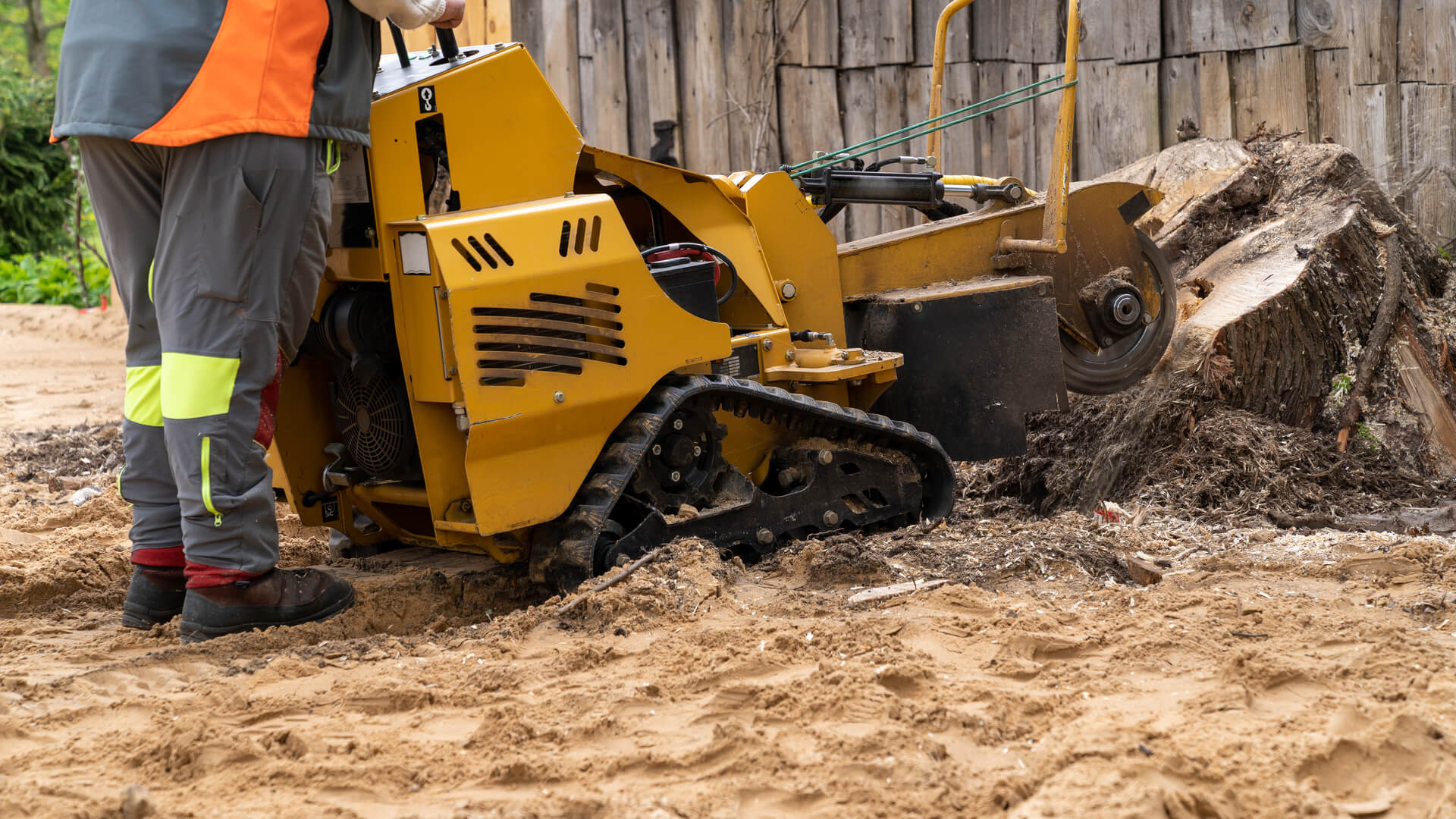
This is a big job, especially for something like palm tree removal, which requires specific techniques. It’s absolutely not a DIY project. This is where you need a certified arborist to assess the situation and execute the removal safely. And of course, once the tree is down, you’ll want stump removal to complete the job and reclaim that space in your yard.
If you’re in Los Angeles and are worried about a tree, just give us a shout at ClearWay Tree Trimming Solutions. We’ll give you an honest assessment. If we can save it with trimming, we’ll tell you. If it truly needs to come down, we’ll explain why and give you a clear, transparent quote.
Making It Happen: Your Action Plan for a More Valuable Property
Convinced yet? Great! So, what’s the next step? How do you turn your arboreal assets into a goldmine?
- Take a Walk. Grab a notepad and take a slow walk around your property. Look at your trees with a critical eye. Do you see dead branches? Are trees touching the house or roof? Is the canopy too dense? Jot it all down.
- Find the Right Pros. A quick search for “tree trimmers near me” will give you a million options. Look for a licensed, insured company with great reviews. FYI, this is where we humbly suggest you start with ClearWay Tree Trimming Solutions. We live and work here in Los Angeles, so we know the specific trees and challenges of our area.
- Get a Consultation. Any reputable company will offer a free, no-obligation assessment. They should walk you through what needs to be done and why. Ask questions! A good arborist loves to educate homeowners.
- Understand the Quote. A good quote will break down the scope of work. Is it just trimming? Does it include cleanup? Is stump removal a separate line item? There should be no surprises.
- Schedule the Work. Once you’re comfortable, get on the schedule! The best times for trimming are usually late fall through winter when trees are dormant, but safety issues can be addressed any time of year.
Your Top Tree Trimming Questions, Answered
How often should I trim my trees?
It depends on the tree species, its age, and its health. A good rule of thumb is every 3-5 years for mature trees. Younger trees might need more frequent shaping. Fast-growing species will need more attention than slow-growers. We can give you a personalized recommendation after seeing your specific trees.
Will trimming hurt my tree?
Proper trimming absolutely will not. In fact, it helps it. It’s like getting a haircut to get rid of split ends—it promotes healthier growth. Improper trimming (called “topping” or butchering) can cause serious, lasting damage. This is exactly why you hire professionals who understand tree biology.
What’s the average cost for tree trimming?
This is the “how long is a piece of string?” question. The price depends on the tree’s size, species, location, and the amount of work needed. A small ornamental tree might be a few hundred dollars, while a massive, complex oak could be more. The only way to get a truly affordable and accurate quote is to have someone come out for an assessment.
Ready to Unlock Your Property’s Potential?
Look, we get it. Your home is your biggest investment. It’s also your sanctuary. Taking care of your trees is a powerful way to protect both. You’ll enhance your curb appeal, safeguard your property, and create a more beautiful, enjoyable outdoor space for yourself today, all while building value for tomorrow.
So, why not see what a difference it can make? If you’re in the Los Angeles area, we’d be honored to be your tree care partners. The team at ClearWay Tree Trimming Solutions is passionate about helping homeowners like you get the most out of their properties. Let’s have a conversation about your trees. You might be surprised just how valuable they can become.
