
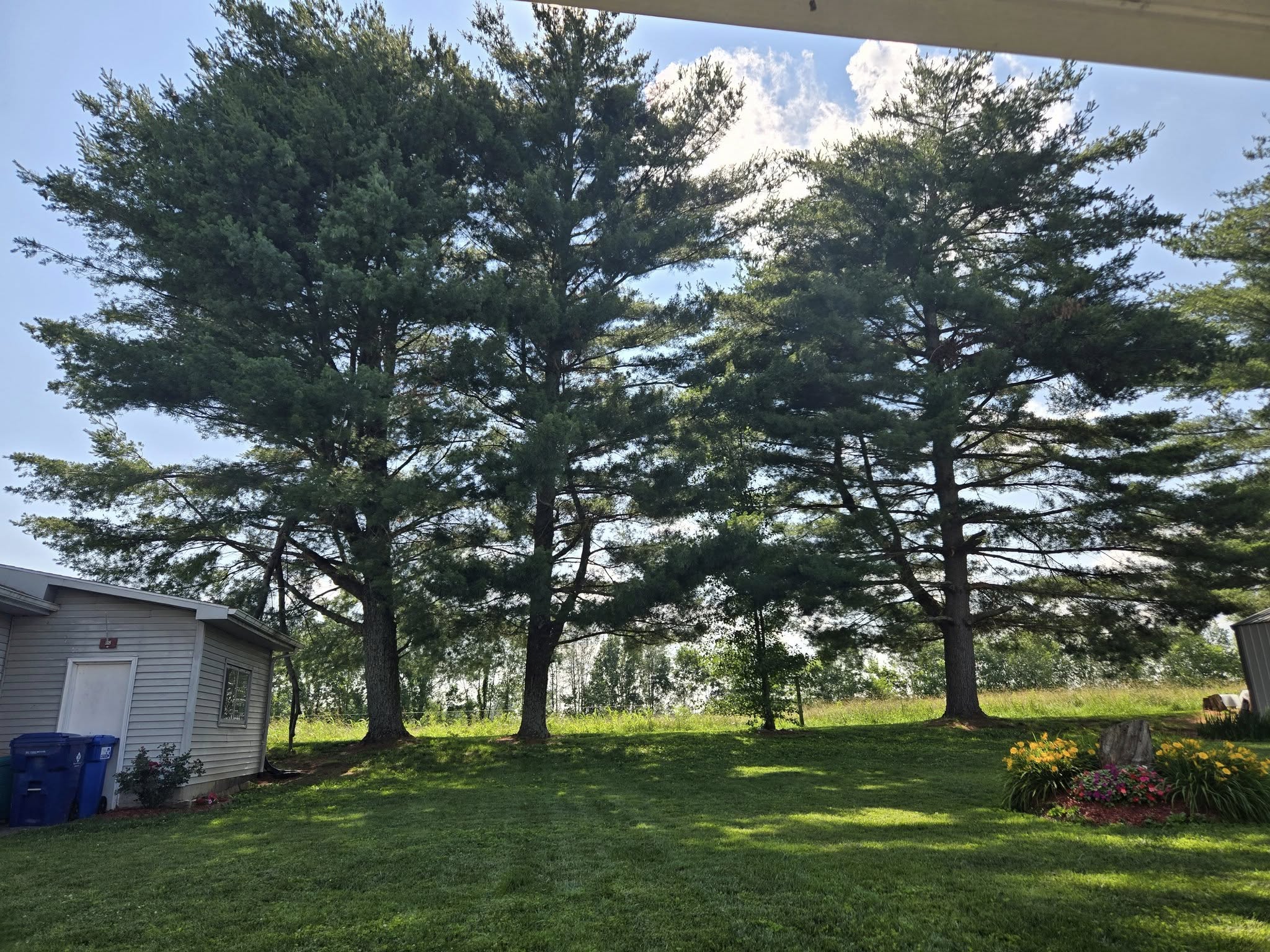
Alright, let’s talk trees. More specifically, let’s talk about how a tree’s age isn’t just a number on a birthday cake—it’s a fundamental blueprint for how we should care for it. If you’re like us, you probably look at a young sapling and a grand, century-old oak and instinctively know they need different things. But what exactly are those things?
We’ve seen it all at ClearWay Tree Trimming Solutions. From the over-enthusiastic new homeowner who gave their young tree a “buzzcut” to the ancient shade tree that just needed a gentle touch. Getting the approach right isn’t just about aesthetics; it’s about the long-term health and safety of your green investment. So, let’s break down how we tailor our approach from the nursery to the retirement home, shall we?
The Sprouting Newbie: Caring for Young Trees (1-5 Years)
Think of a young tree as a toddler. Its main job is to grow, establish itself, and figure out what it wants to be when it grows up. Our goal here isn’t to control size, but to guide form and build a strong foundation.
This early stage is all about structural pruning. We’re the coaches, and the tree is the promising young athlete. We’re helping it develop a strong, central leader (the main upward branch) and a well-spaced scaffold of permanent branches. This prevents future problems like weak, narrow crotches that are prone to splitting.
What we focus on with young trees:
- Establishing a Central Leader: We choose the strongest, most central upward-growing branch to be the “trunk” and remove any competitors.
- Selecting Scaffold Branches: We identify branches that are widely spaced and have strong attachment angles to become the main, permanent limbs of the tree’s structure.
- Removing Problem Branches: This includes dead, damaged, or diseased wood, plus any branches that cross and rub against each other.
The biggest mistake we see? Over-pruning. A young tree needs its leaves to produce food and grow. Taking off too much can stunt it for years. A light, strategic touch is everything. This is one of the most affordable and impactful investments you can make in your landscape. Getting this tree trimming service right from the start saves you a huge cost in corrective work—or even premature tree removal—down the line.
The Prime of Life: Maintaining Mature Trees (10-50+ Years)
This is your tree in its glory days. It’s reached a good size, provides wonderful shade, and is a cornerstone of your property’s look. Now, the game changes from training to maintenance and risk management.
Mature tree care is less about shaping and more about health and safety. We’re looking for weight reduction on long limbs, clearing branches from roofs and power lines, and improving light and air penetration through the canopy. This helps reduce the chance of storm damage and keeps the tree vigorously healthy.
Ever wondered why a seemingly healthy tree suddenly drops a limb on a calm day? Often, it’s because of a structural weakness that went unnoticed for decades.
Our approach for mature trees includes:
- Crown Thinning: We selectively remove branches to increase light penetration and air movement, which reduces disease risk and wind resistance.
- Crown Raising: We carefully remove lower branches to provide clearance for buildings, vehicles, and pedestrians.
- Crown Reduction: This is a specific technique to reduce the height or spread of a tree, but it must be done correctly. We avoid “topping” at all costs—a brutal practice that butchers trees and leads to decay and hazardous regrowth.
- Deadwooding: The simple removal of dead branches, which is crucial for safety and tree health.
This is where the expertise of professional tree trimmers really shines. A mature tree is a significant asset, and a wrong cut can have consequences for years. Here in Los Angeles, with our occasional Santa Ana winds, proper maintenance isn’t just about looks; it’s about protecting your home. When you’re searching for a trusted tree service near me, you want a team that understands these nuances.
The Golden Oldies: Preserving and Protecting Veteran Trees
Ah, the ancient ones. These trees have character, history, and a presence that you just can’t replicate. They’re also more vulnerable. Our goal with veteran trees shifts from active management to preservation and risk mitigation. We treat them with the respect they’ve earned.
These trees often have reduced energy reserves, so every cut matters. We’re incredibly conservative. The philosophy is “less is more.” We might do a crown clean to remove deadwood, a very light thin to reduce weight on ancient limbs, and monitor for signs of decay or instability.
Key considerations for ancient trees:
- Minimal Intervention: We only remove what is necessary for safety. The tree’s energy is precious.
- Decay Assessment: We carefully inspect for hollows and decay, as this is a primary factor in the structural integrity of an old tree.
- Cabling and Bracing: Sometimes, instead of tree cutting, we can install supportive cables to help hold a weak crotch together, allowing the tree to live on safely for many more years.
It’s a delicate balance. We’ve been called out to assess many a majestic old tree that a less-experienced crew might have recommended for full tree removal. Often, we find that with a gentle, targeted approach, the tree can remain a safe and beautiful part of the property for a long time. It’s one of the most rewarding parts of our job at ClearWay.
A Quick Guide to Age-Based Trimming
Here’s a handy table to summarize the different approaches. Think of it as a cheat sheet for your tree’s life stages.
| Tree Life Stage | Primary Goal | Common Techniques | What to Avoid |
|---|---|---|---|
| Young (1-5 yrs) | Structural Training | Structural Pruning, Central Leader Training | Over-pruning, Removing too much foliage |
| Mature (10-50+ yrs) | Health & Safety Maintenance | Crown Thinning, Crown Raising, Deadwooding | Tree Topping, Making large, unnecessary cuts |
| Ancient (50+ yrs) | Preservation & Risk Mitigation | Crown Cleaning, Light Reduction, Cabling | Heavy pruning, Removing large living limbs |
Special Cases: The Ageless Wonders (Like Palm Trees)
Now, let’s throw a curveball. Some trees, like palms, don’t play by the same rules. They have a different growth habit (they grow from a single “heart” at the top) and their age is less of a factor for trimming than their species and health.
Palm tree trimming is a science of its own. The “hurricane cut” – where all but a few fronds are removed – is a big no-no in our professional opinion. It stresses the tree and attracts pests. We only remove fronds that are completely brown, drooping below horizontal, or pose a genuine hazard.
Palm tree removal, however, is a different beast altogether. It’s often a last resort for a dead or dying palm, or one that is hazardously positioned. It’s a specialized job that requires precision, especially in tight Los Angeles spaces.
Tying It All Together: Why This Matters for You
So, why does all this talk about tree age matter to you, the tree owner? Because using a one-size-fits-all approach is like using the same medicine for a cold and a broken leg. It just doesn’t work.
Using the wrong technique can:
- Stunt a young tree’s growth.
- Stress a mature tree, making it susceptible to disease.
- Drastically shorten the life of an ancient tree.
- Ultimately cost you more money in corrective care or full removal.
When you understand the “why” behind the trim, you can make better decisions for your landscape. IMO, it’s what separates a true arborist from someone with just a chainsaw.
Your Questions, Our Answers
We get a lot of questions, so let’s tackle a few common ones.
How often should I trim my trees?
There’s no universal answer, which is frustrating, we know. A young tree might need guidance every 2-3 years. A mature shade tree might be on a 3-5 year cycle. An ancient tree might only need attention every 5+ years, if at all. It totally depends on the species, age, and location of the tree. FYI, that’s exactly what we assess during a free consultation.
Is it cheaper to remove a tree than to keep trimming it?
In the short term, maybe. But think long-term. A well-maintained tree adds significant value to your property, saves on energy costs through shade, and improves your environment. The price of regular, affordable maintenance is almost always less than the combined cost of emergency storm damage cleanup, property repair, and stump removal after a failure.
Can I do this myself?
For small, young trees, maybe. But for any mature tree, or any work off the ground, please call a pro. We have the insurance, the training, and the equipment to do it safely and correctly. The potential for personal injury or property damage is just too high. It’s not worth the risk :/
At the end of the day, trees are living legacies. Whether you’re nurturing a young whip or preserving a neighborhood patriarch, giving them the age-appropriate care they deserve is the key to a long, healthy, and beautiful life. It’s a philosophy we live by at ClearWay Tree Trimming Solutions. We don’t just see a tree; we see its past, its present, and its potential future.
If you’re looking at your trees and wondering what stage they’re in and what they need, just give us a call. We’d be happy to come out, have a look, and have a friendly chat about the best way to care for your green assets. After all, that’s what we’re here for.
